When I talk to data vendors about what data I’d like them to resell, I always mention patents. And then I get pushback from my peer consultants on whether searching patens is worth the time. The argument in our community against searching patents are twofold:
- We’re not sure how to value patents
- Usually the patent gets assigned to the inventor’s employer
I still advocate looking for patents. However, there are a few steps one would need to take to make good use of the data, and that is the subject of this article.
But Wait, Patents by Themselves Are Not Valuable
We tend to think of things we can’t easily value as not valuable. However, as ?? teaches us in their ?? about valuing patents, we can value them.
They go to the bottom line of any company in the category of “goodwill” [check]. Intellectual property is goodwill. Take a look at what Investopedia says about their value here: www.investopedia.com/articles/fundamental-analysis/09/valuing-patent.asp
Let’s take a look at Coca Cola’s annual report; See the line on goodwill? Part of that includes the value the company received from buying other companies (see:?? To understand that) and part of it includes property like intellectual property.
Let’s take a look at one patent that was assigned to Coca Cola:
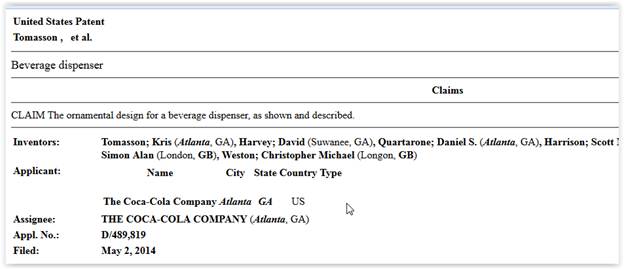
We noticed that the assignee is the Coca Cola Company, confirming our paradigm that the inventor (let’s say our prospect is Kris Tomasson) does not gain wealth from this patent.
However, let’s look at all of Mr. Tomasson’s listed patents:
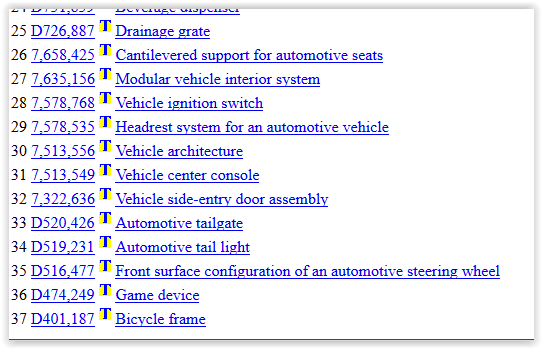
Okay, what are they?
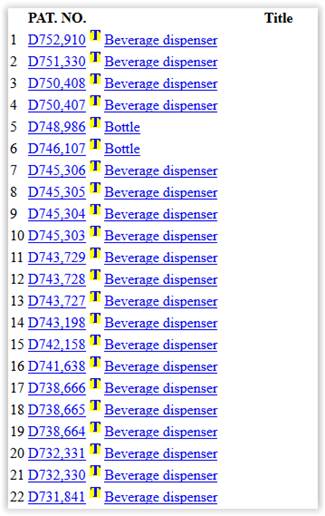
We see a lot of design work for Coca Cola. What else?
Wait – Mr. Tomasson was designing stuff for automobiles? And bikes? And game devices?
Now we are interested in this prospect, because we know that he is associated with our organization but we have never noticed him before. We go straight to LinkedIn:
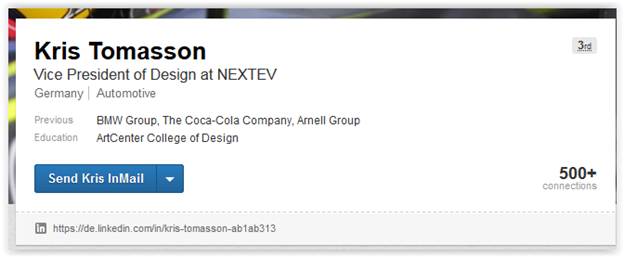
And now we see these wealth indicators:
- Long history of design work with larger companies
- A large list of patents, meaning that he likely earned a variety of bonuses, or was at minimum valuable to these companies
- Moved to a higher position at NEXTEV
- Absolutely a prospect
Fudge, look for Coke’s 10K to see if they talk about compensation around patents.
But What about the Whole List?
Now you have a dilemma: Do you want to just look for patents for each prospect that may look like she has one? Or pass your entire database through the patent search function? Well, we have access to all the patents in the United States through the US Patent Office’s agreement with Reed Tech to provide patent date for free, without restriction on use, to the general public. See here: http://patents.reedtech.com/patent-products.php
The catch is that the data is stored in xml files. That is, you need some kind of program to parse the data into text files before you write the program to match them to the names, cities, and states from your database. You can also write your matching algorithms in your local reporting program once you have the patent data converted to text.
A good article on the considerations for using Python for extracting the xml files to text is here: http://funginstitute.berkeley.edu/wp-content/uploads/2013/06/Extracting_and_Formatting.pdf
The actual Python code is here: https://github.com/funginstitute/patentprocessor/
Now, what? Well, I’m going to use my new Python skills to play with this data. Give it a try if you have a programmer available. Even if you don’t consider looking for patents for each of your prospects who are engineers, designers, or work for any kind of company that would hold patents.